
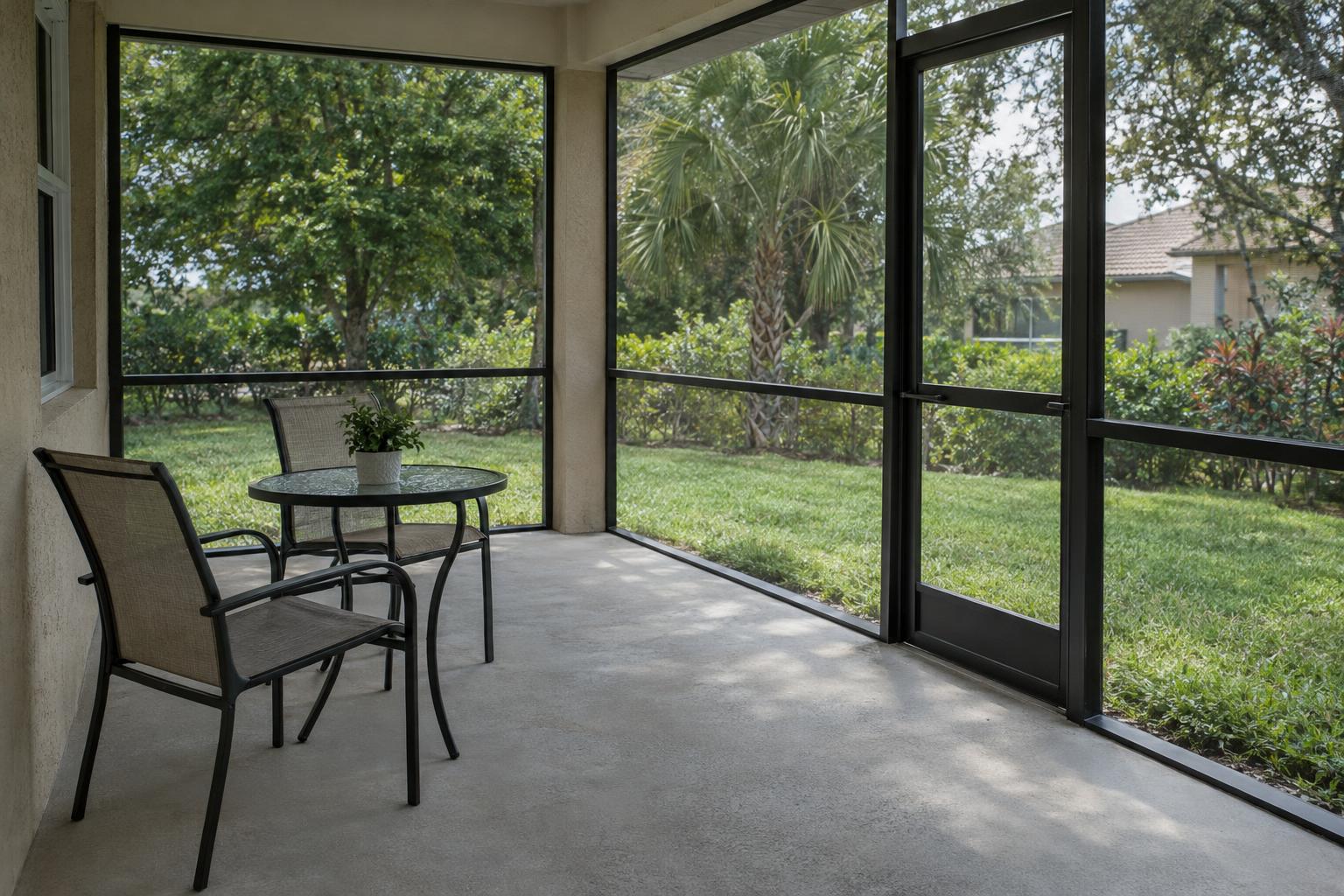
A lanai or screen enclosure is one of the most used spaces in a Southwest Florida home, and one of the most exposed. Rain, humidity, pollen, salt air, and shade from nearby trees all leave their mark on screens, framing, and the floor underneath. A few light habits between full exterior cleanings can keep the space more pleasant and make the next deep clean easier. This guide explains what homeowners in Cape Coral and Fort Myers can safely do themselves, what to leave alone, and the questions worth raising when a lanai needs more than a quick wipe.
Know What Builds Up on a Lanai
Most lanai grime falls into a few groups. Dust and pollen settle on screens and horizontal framing. Humidity encourages green or dark growth on shaded corners and the lower sections. Rain splashes soil and debris up from the ground onto the lower screen panels, and bird droppings and leaf litter collect on the floor and along the edges. Each type responds to a slightly different approach.
Walk the space in daylight and note where buildup is heaviest. The shaded north side often grows more than the sunny side, and areas under trees or near irrigation may need attention more often. Knowing the pattern helps you decide where a quick routine is enough and where a professional visit makes more sense.
Start With Dry Debris Removal
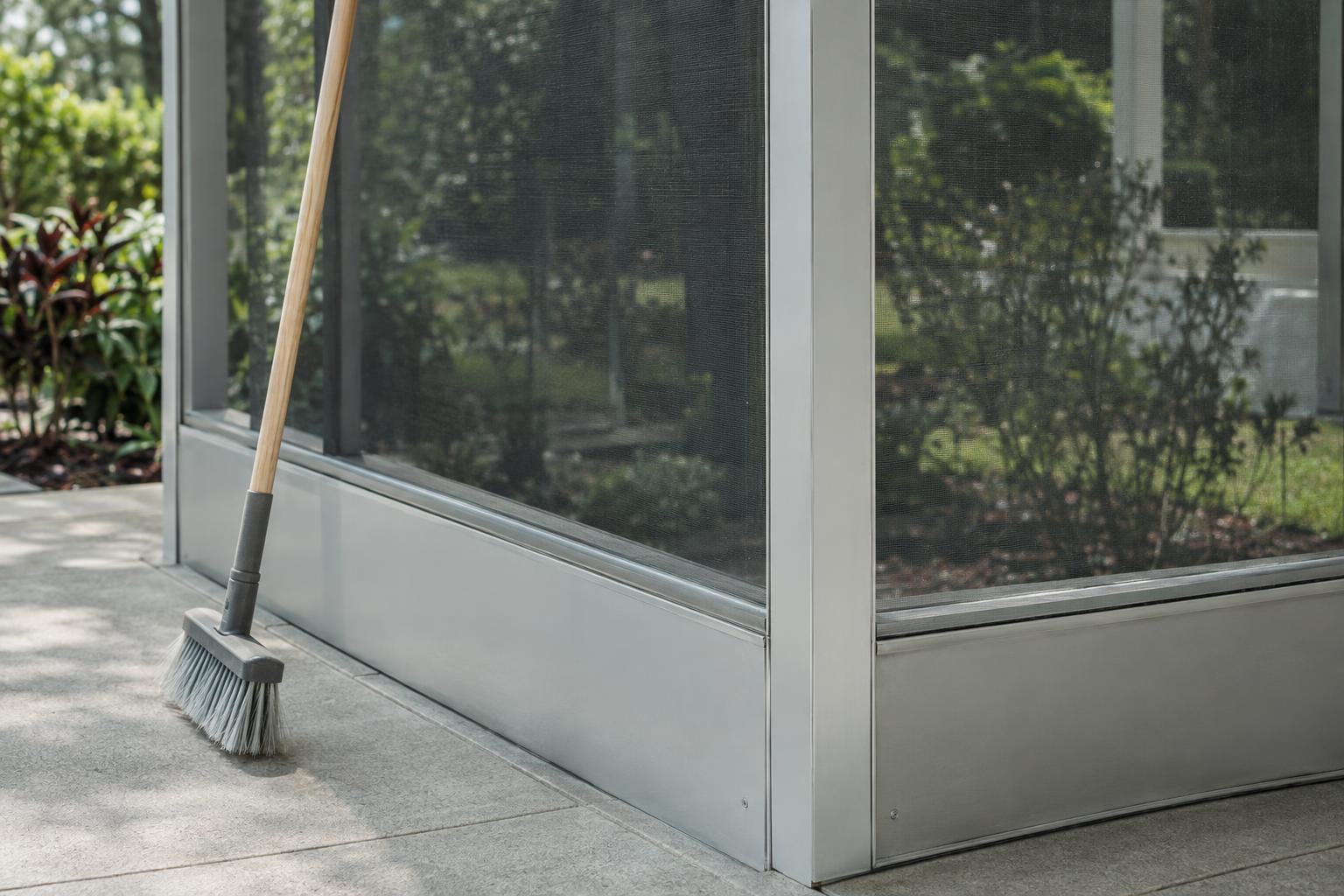
Before any water touches the screens, clear what is loose. A soft broom or a leaf blower on a low setting will move leaves and grit off the floor. For the screen panels, a soft-bristle brush on a long handle, moving lightly, can lift dry dust and cobwebs. Work from the top down so debris falls to the floor, then sweep up at the end.
Check the corners and the ledges where the screen frame meets the floor or the house wall. Debris collects there and holds moisture against the framing. Clearing it regularly is one of the simplest ways to slow down staining and growth.
Rinse Screens Gently, Not Aggressively
Screens are thin and easy to stretch or tear. A regular garden hose with a gentle spray from a few feet away is plenty for a light rinse. Avoid aiming a strong, narrow stream at the mesh, and be careful not to push the screen out of its spline, the rubber strip that holds it in the frame.
If a screen needs more than a rinse, use a soft brush or a sponge with a mild soap solution and light strokes, then rinse from the top down. Do not use a pressure washer on screens yourself. High pressure can damage the mesh and force water into places it should not go. If the screens look heavily stained or are visibly aging, that is a good moment to talk to a professional about the best way to proceed.
Look After the Frame and Fasteners
Screen enclosure framing is commonly aluminum, and it can show chalky oxidation or staining over time. A soft cloth with mild soap and water will remove most surface dirt. Rinse well and dry it. Avoid abrasive pads or harsh chemicals, which can scratch coatings and leave marks that are harder to remove than the original dirt.
While you are close, look at the screws, corners, and door hardware. Rust streaks, loose panels, or a sagging screen are repair questions, not cleaning questions. Note them and call a screen or enclosure contractor if needed, because cleaning over damage can hide a problem that gets worse.
Keep the Floor and Furniture in Shape
The lanai floor may be concrete, pavers, tile, or a coated surface, and each one has its own care needs. Sweep regularly, and rinse with a hose to carry away fine grit. For stains, use a mild cleaner that suits the material, test it in a hidden corner, and avoid mixing products. If you are unsure what a coating or sealer can tolerate, ask the installer or check the manufacturer’s care instructions.
Furniture holds moisture too. Wipe cushions and tables, store cushions off the floor when you expect heavy rain, and move planters now and then so the surface underneath can dry. Standing water under pots and mats is a common source of dark spots.
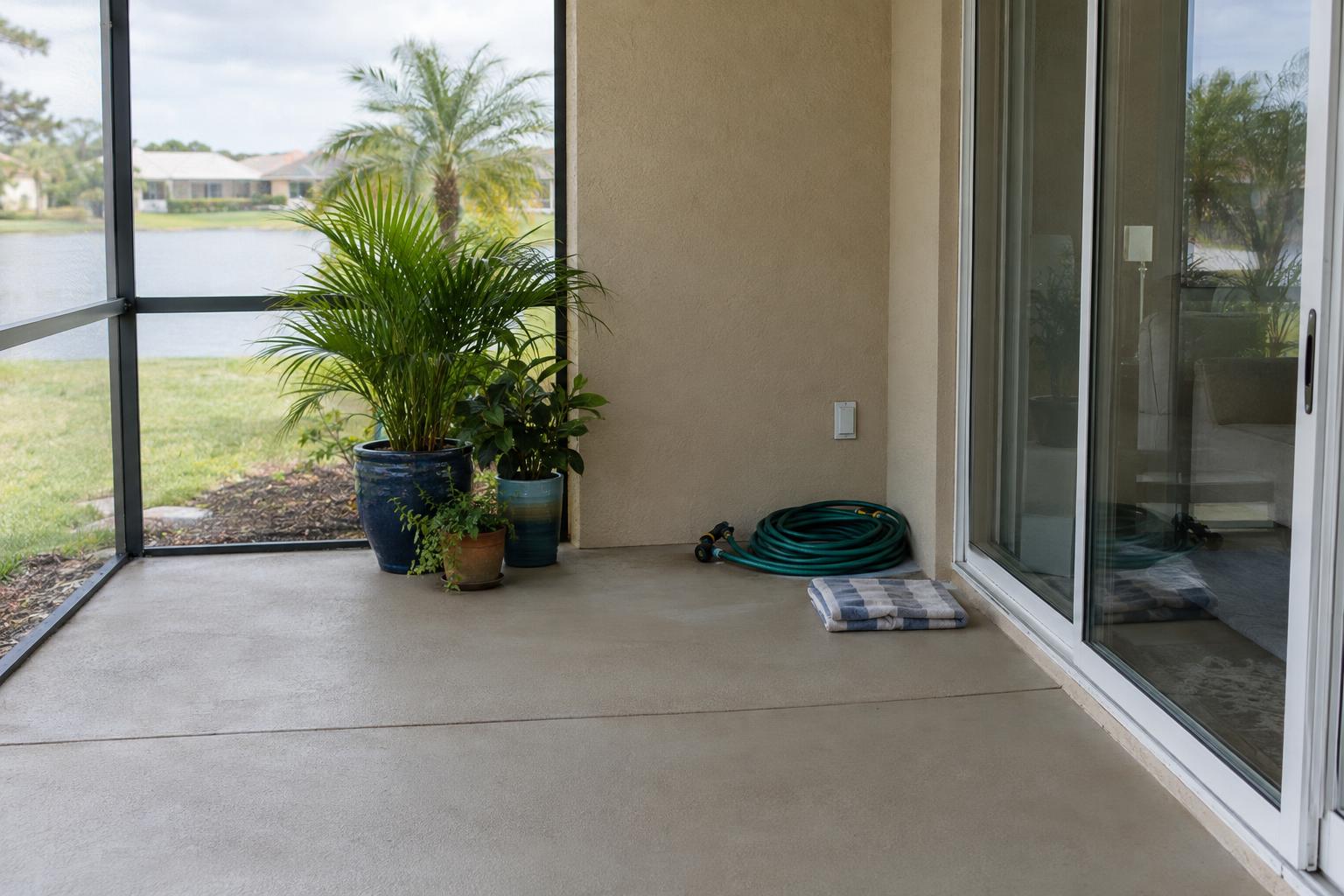
Protect Plants, Electrical Items, and Neighbors
Use common sense around the surroundings. Keep water away from outlets, light fixtures, fans, and electronics, and switch off power at the breaker if you will be rinsing near them. Water nearby plants before and after any cleaner use, and choose mild products, since runoff can reach the landscape. The Florida Department of Environmental Protection’s stormwater resources explain why it is worth keeping soapy water and debris out of storm drains. Rinse onto the lawn or a planted area when you can, instead of letting it run toward the street.
If neighbors share a fence or wall, think about where overspray and runoff will go. A short check of the weather helps too, because a windy day carries spray farther than you expect, and cleaning right before a storm can undo your effort.
Set a Seasonal Routine
A routine keeps the work small. A quick sweep and brush every week or two, a gentle rinse each month during the wet season, and a closer look at the framing and floor each season is enough for many homes. Heavier use, tree cover, or nearby water may call for more frequent attention.
After storms, check for fallen debris, loose screens, and standing water, and clear them promptly. Small steps after a storm stop a mess from setting into the surface.
Keep a short checklist on your phone or inside a closet door, listing the tasks and the months you want to do them. Photos taken after a thorough cleaning give you a reference for how the space should look, which makes slow changes easier to notice. If you rent the home or share the space with others, agree on who handles each task, so the routine does not depend on one person remembering.
When a Professional Visit Makes Sense
Some jobs go beyond routine care: widespread staining, heavy growth, tall or hard-to-reach panels, or uncertainty about what a surface can handle. In those cases it can be safer to have an exterior cleaning team assess the space and the best approach before work begins.
3D Cleaning provides pressure washing for homes and businesses in Cape Coral and Fort Myers, with coverage extending to Punta Gorda. Use the estimate form to describe the lanai, the areas that concern you, and any access or preparation details, and the scope can be confirmed before you schedule. To talk through lanai screen enclosure care for your home, call 3D Cleaning at (239) 919-4665.
Frequently Asked Questions About Lanai and Screen Enclosure Care
How often should I rinse the screens on a lanai?
Many homeowners do a light rinse monthly in the wet season and as needed otherwise. Shaded or tree-covered enclosures may need it more often.
Can I pressure wash my own screen enclosure?
It is best not to. Strong pressure can stretch or tear screens and loosen the spline. Use a gentle hose rinse and a soft brush, and ask a professional about heavier cleaning.
What should I use to clean the aluminum frame?
A soft cloth with mild soap and water handles most surface dirt. Avoid abrasive pads and harsh chemicals, and rinse and dry the frame afterward.
What if I notice rust streaks or loose panels?
Treat those as repair issues. Note where they are and contact an enclosure or screen contractor before cleaning over damage.
If your lanai or screen enclosure needs more than routine care, contact 3D Cleaning through its estimate form. The team serves Cape Coral and Fort Myers, with supporting coverage in Punta Gorda. Include the size of the space, the areas of concern, and any access or preparation details so the conversation can start with the right information.