
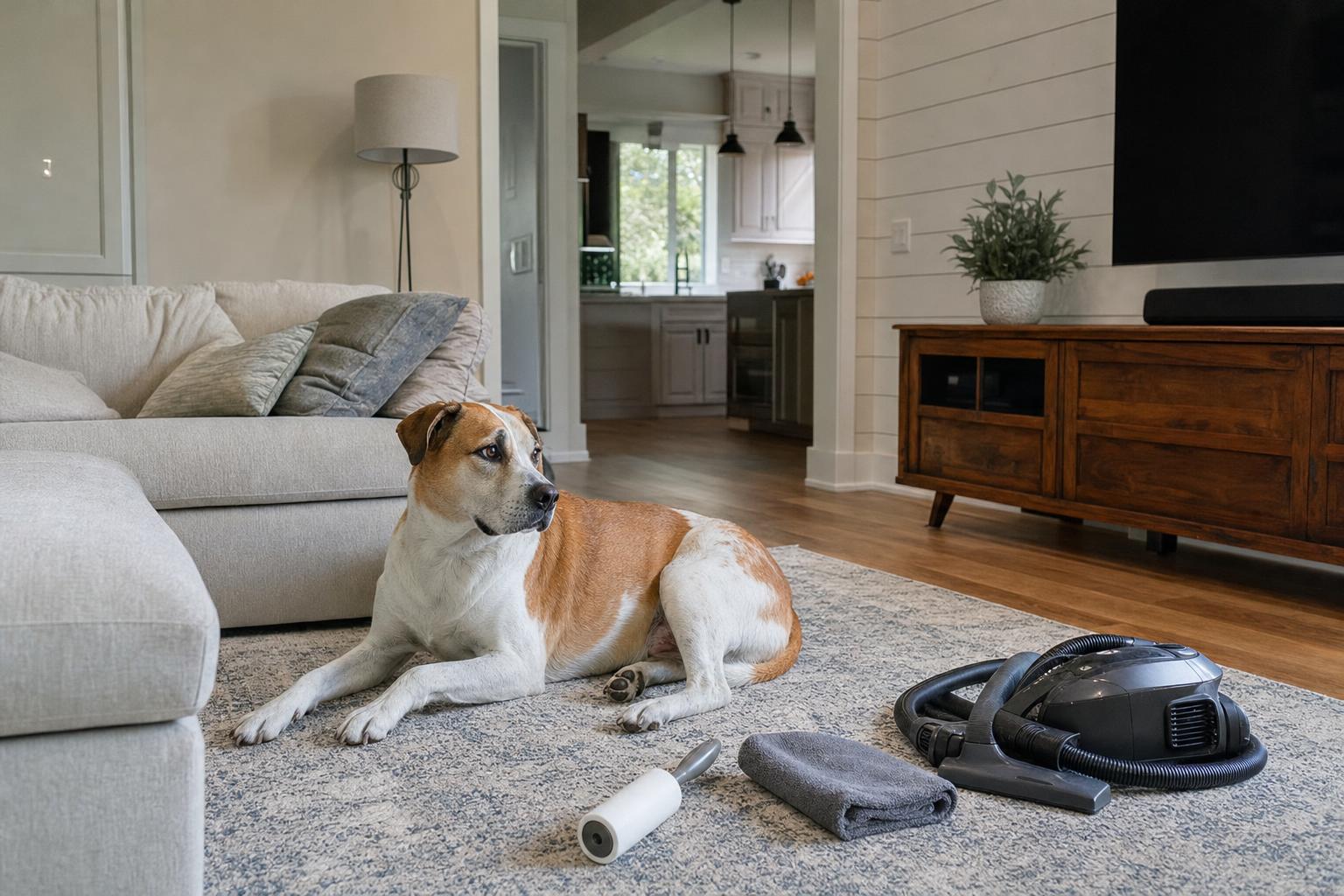
Living with a pet means fur can appear in places that looked clean a few hours ago. A pet hair cleaning routine works best when it follows the way hair moves through a home: from beds and favorite resting spots, across upholstery, and eventually onto the floor. That order keeps you from wiping one surface only to cover it again when you vacuum the rug. It also makes the work easier to split into short sessions rather than waiting for a full-house reset. This guide focuses on ordinary household tools, sensible sequencing, and the points where routine cleaning may not be enough.
Begin Where the Pet Rests
Start with the washable items that hold the most loose fur: pet blankets, washable covers, and the bedding in favorite resting areas. Shake these items outdoors only where doing so will not disturb neighbors or send debris into a shared space; otherwise, put them directly into a laundry bag. Check the care label before washing. A lint roller or upholstery brush can lift visible hair before the fabric goes into the machine, which reduces loose fur carried to other clothing. Keep pet items separate from kitchen cloths so the household has a clear routine.
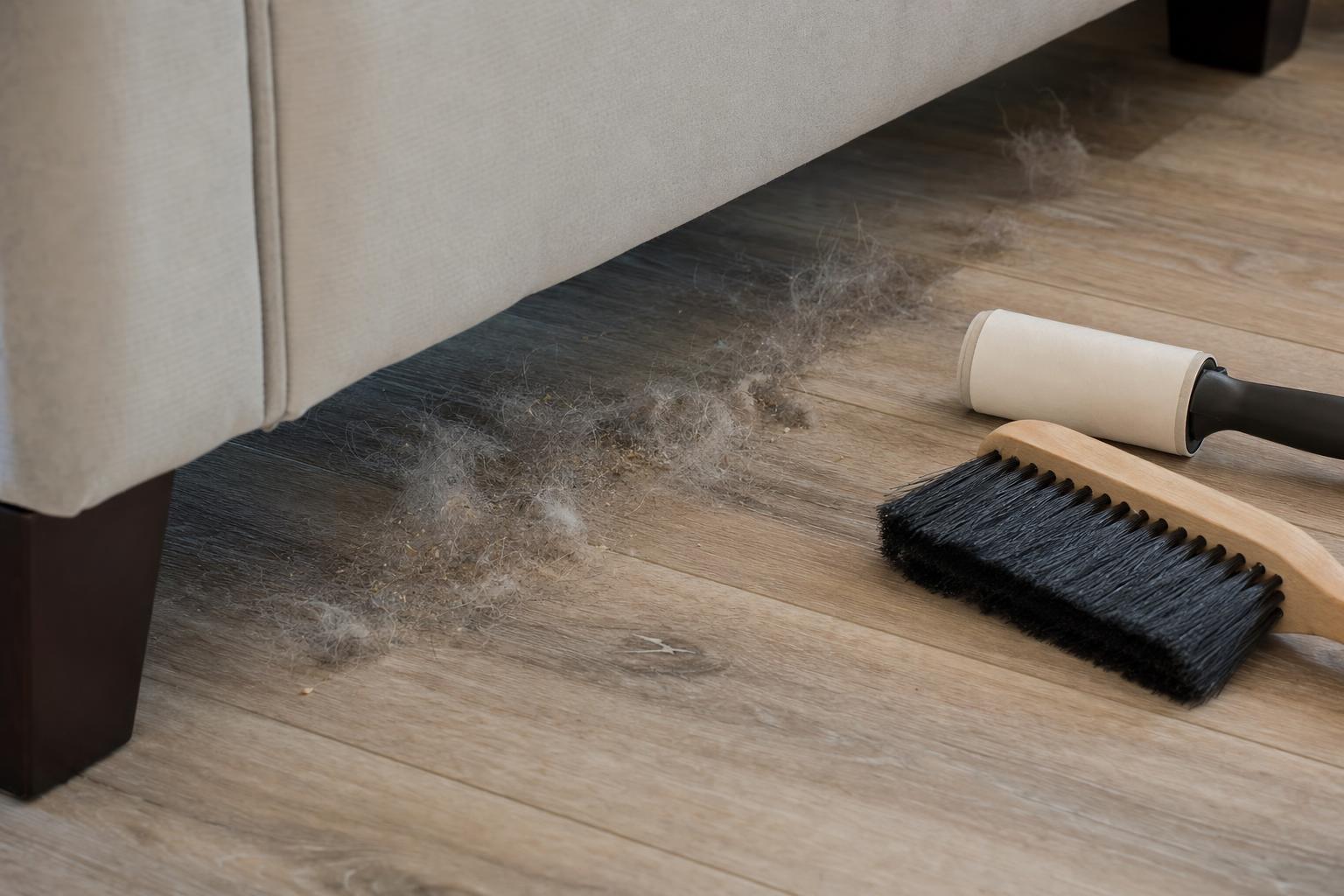
Next, clear the floor around beds, food bowls, and favorite window spots. Move light toys and bowls, collect larger clumps by hand or with a disposable pickup sheet, and then vacuum the exposed area. Hair often gathers where a wall meets a bed or furniture leg, so make one slow pass along those edges. Put the items back only after the floor is clear. This first step creates a clean starting point for the rest of the room and makes it easier to notice where fur returns most quickly.
Remove Loose Hair from Upholstery Before Vacuuming Floors
Pet hair behaves differently across fabrics. A woven sofa may trap short strands between its threads, while a smooth cushion lets them sit on top. Check the furniture maker’s care label and test a brush or cloth on a hidden spot before using it across a visible area. A soft upholstery brush, a clean rubber tool designed for fabric, or a vacuum attachment may help lift hair without soaking the material. Work in one direction and gather what comes loose instead of rubbing it deeper into the weave.
Use a fresh lint roller sheet or rinse a reusable tool when it begins to transfer fur rather than collect it. Pay attention to cushion seams, the underside of seat cushions, and the narrow gap where a sofa back meets its seat. Those places can hold more hair than a large, flat surface. Do not assume that a stronger adhesive or rougher brush is safer; delicate fabrics can snag or develop a worn patch. If a material reacts poorly in the test area, stop and follow the furniture maker’s cleaning instructions.
Work from High Surfaces Down to the Floor
After fabric surfaces, remove visible hair from low shelves, side tables, and the edges of baseboards. A lightly damp microfiber cloth can collect loose strands from suitable hard surfaces, but it should not leave a wet film on wood or unfinished material. Use a clean section of cloth as it picks up fur; once the cloth is covered, shaking it over the floor simply creates another cleanup step. Keep a small bag or wastebasket close so collected hair does not fall back onto furniture.
For open shelves or decorative objects, decide whether each item needs to be lifted or can be cleaned around. Moving everything in a room can turn a simple weekly pass into a major project. Remove only what blocks an effective wipe, then return it after the surface dries. On electronic equipment, use the manufacturer’s dusting instructions and keep liquids away from vents. The useful goal is consistent removal of visible fur, not a perfect, sterile room or a promise that hair will not return.
Once higher surfaces are done, vacuum rugs and floors. Use an attachment that suits the floor type and follow the vacuum manufacturer’s instructions for brush-roll settings. A hard floor may need a setting that prevents a rotating brush from scattering debris. Rugs may need slower passes over the areas where pets lie or walk most often. Empty the canister or change the bag when the unit is off and the manual says it is safe. Finish by checking corners, under the front edge of furniture, and the route between the pet’s bed and the door.
Match the Tool to the Surface
There is no single tool that is best for every surface in a pet-friendly home. A vacuum with a suitable upholstery attachment may work on a couch, while a soft brush may be gentler on a throw. A microfiber cloth is useful for many washable or hard surfaces, but it should not be used wet on materials that should stay dry. The vacuum’s user guide can clarify whether a brush roll should be turned off for delicate rugs or hard flooring. These small choices reduce unnecessary rubbing and help the same tools last longer.
For pet hair near a ceiling fan, vent, or high shelf, consider whether reaching the area is safe with the equipment available. Do not balance on a chair or stretch across a stairway to remove a strand. Use an appropriate extension tool from the floor or leave the high area for someone with proper equipment. If you use a household cleaning product on a surface, read and follow its label exactly, including any directions about ventilation, rinsing, and keeping pets away until the surface is ready. EPA’s Safer Choice information can help readers identify products reviewed against EPA criteria.
Build a Repeatable Short Routine
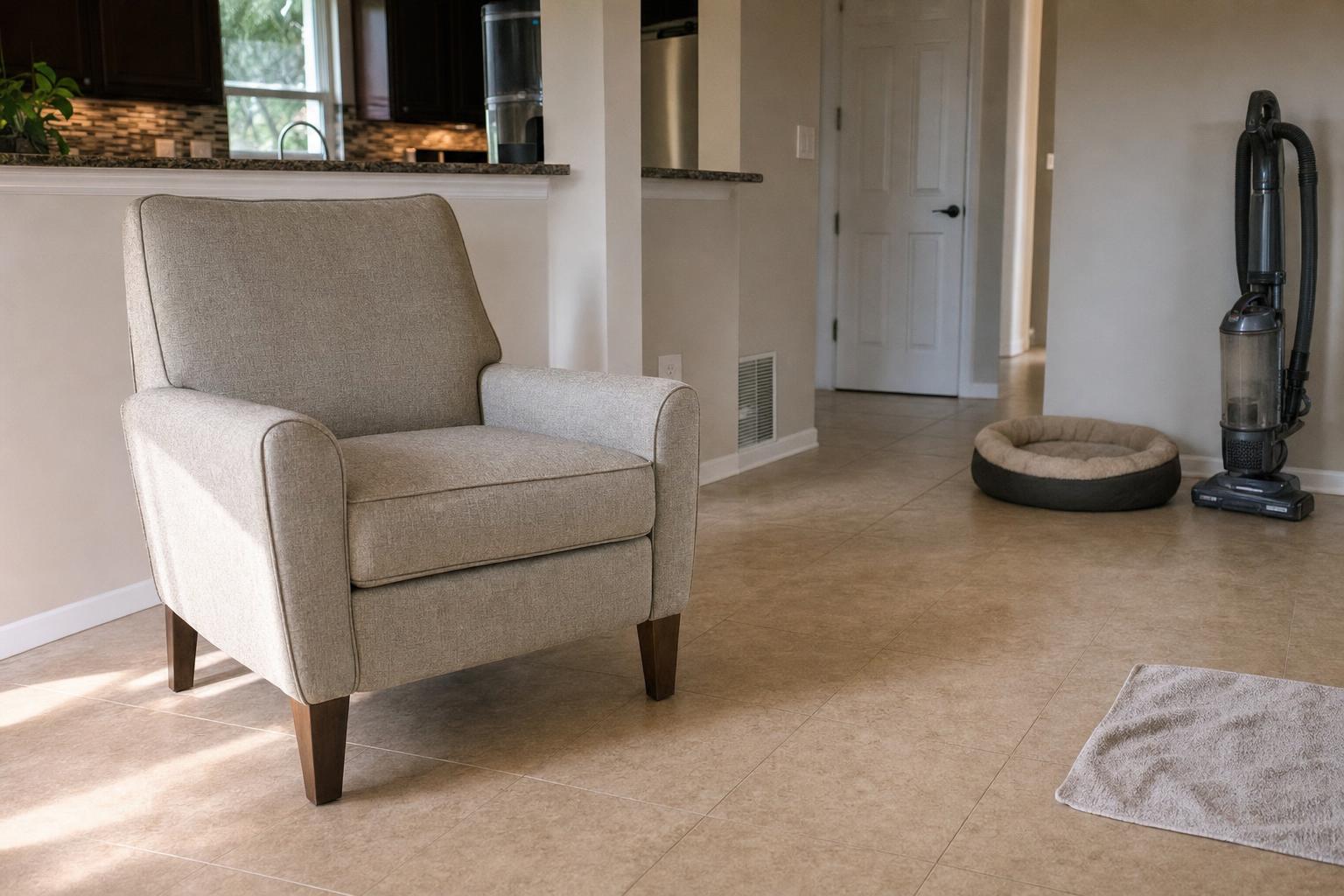
A practical pet hair cleaning routine is easier to maintain when it has a small weekly core and a flexible extra pass. Pick a regular day to wash pet bedding, lift fur from upholstery, and vacuum the main resting areas. Add a quick floor pass to the busiest room when visible hair begins to gather. The exact frequency depends on the number of pets, the coat, the season, and how the household uses each room. Rather than promising a fixed interval, notice where hair returns and adjust the order to your home.
Keep the tools together in a reachable basket: a reusable cloth, lint roller, upholstery attachment, and a small bag for collected fur. Store the vacuum where it can be used without moving several boxes first. If another household member helps, write down the three or four regular tasks instead of making the routine dependent on one person remembering every detail. Wash reusable cloths separately from lint-heavy items and check appliance care directions before cleaning filters or brush rolls. A simple, repeatable pattern usually works better than a long checklist that no one has time to finish.
When the entire home needs attention, room-by-room house cleaning can complement the quick pet-hair maintenance you do between visits. Keep pet food, toys, and bedding in their normal places before a scheduled service, and tell the team which rooms or surfaces need special attention. 3D Cleaning serves Cape Coral and Fort Myers; see its residential cleaning service and request an estimate through the contact form if you want to discuss the home’s scope.
Frequently Asked Questions About Pet Hair Cleaning
Should I vacuum before or after dusting?
Dust and hair usually fall downward, so clean higher surfaces and furniture first, then vacuum the floor. If you spot fresh clumps after vacuuming, pick them up rather than restarting the whole room.
How can I get pet hair off a sofa?
Check the upholstery care label and test a suitable soft brush, cloth, or vacuum attachment in an inconspicuous place. Work gently and stop if the fabric pills, snags, or changes appearance.
How often should pet bedding be cleaned?
Follow the care label and adjust to how quickly the bedding collects hair or soil. A regular day on the household calendar helps prevent it from becoming an occasional large chore.
Can professional house cleaning remove every pet hair?
No routine visit can guarantee that no hair will remain or return. Share the rooms and surfaces that matter most, and keep up with small between-visit passes where pets spend time.
For a manageable pet hair cleaning routine, contact 3D Cleaning through its estimate form to discuss residential cleaning in Cape Coral or Fort Myers.