
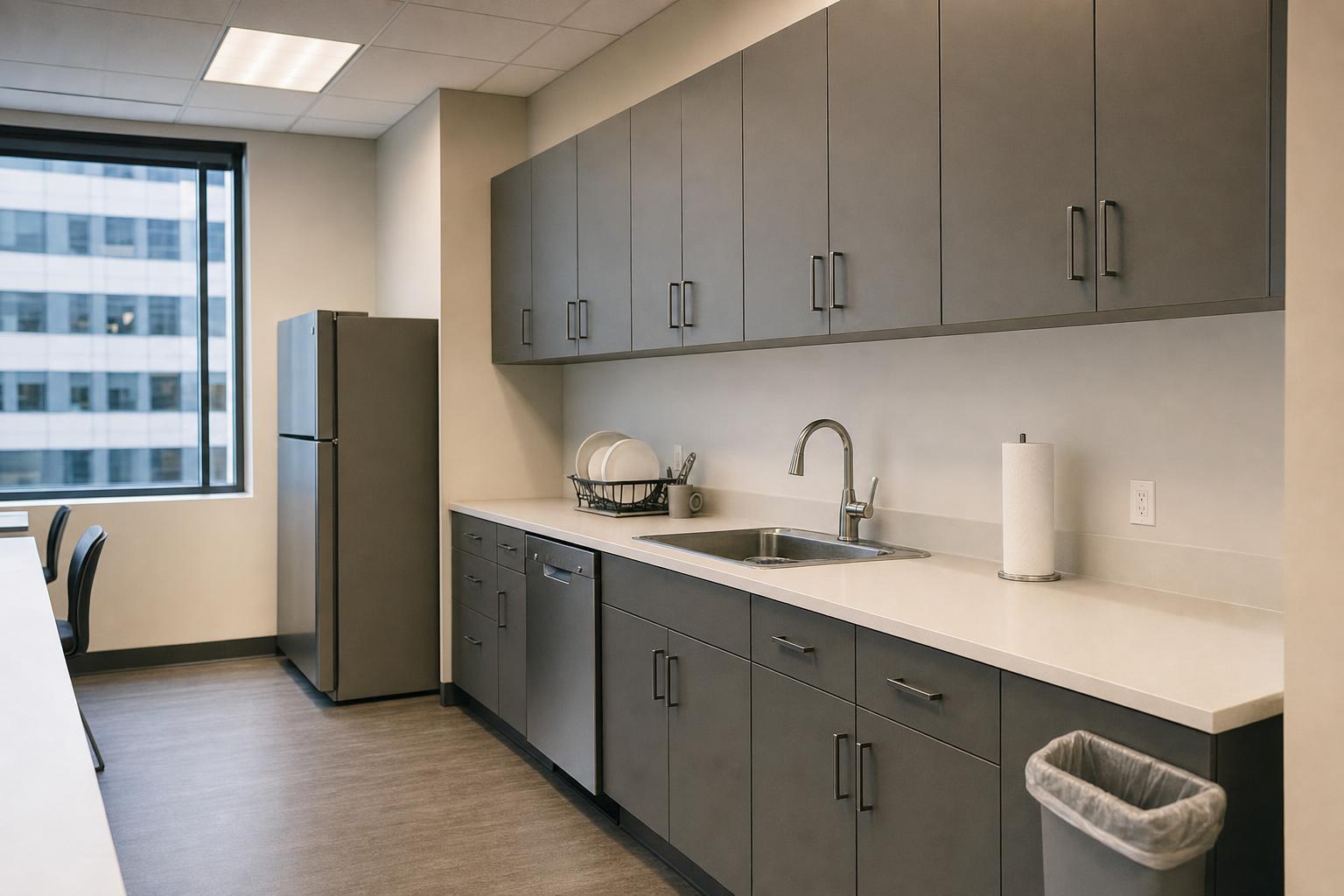
An office kitchen gets used by many people, so its mess rarely comes from one task or one moment. A shared office kitchen cleaning plan gives a team a simple division between daily resets and the broader cleaning a service may perform. The plan should fit the actual space: perhaps a sink, counter, refrigerator, microwave, table, and waste bins, or a smaller kitchenette with only a few of those features. Begin by assigning clear responsibilities, identifying surface materials, and making supplies easy to locate. A written routine can reduce confusion without treating cleaning as a substitute for safe food handling or appliance maintenance.
Define the Space and Its High-Use Surfaces
Walk through the kitchenette and list the surfaces people touch or use most: counter edges, cabinet pulls, faucet handles, refrigerator handles, microwave buttons, and table tops. Include the sink, floor, waste bin, and any appliance exterior. The list should reflect what is actually present instead of copying a generic office checklist. Note whether counters are stone, laminate, stainless steel, or another material, since care instructions vary. Put the manufacturer’s directions for specialized surfaces or appliances where the person responsible can find them.
Agree on what “reset” means at the end of a workday. It could include removing personal food from shared areas, collecting cups, clearing the sink, wiping a counter with an approved product, and replacing a full bin liner. Do not assume everyone interprets a clean counter the same way. A short list attached inside a cabinet or included in the staff guide can state the expected result without naming or blaming individuals. Make sure the routine includes how to report an appliance issue or a spill that needs prompt attention.
Separate Personal Food Tasks from Shared Cleaning
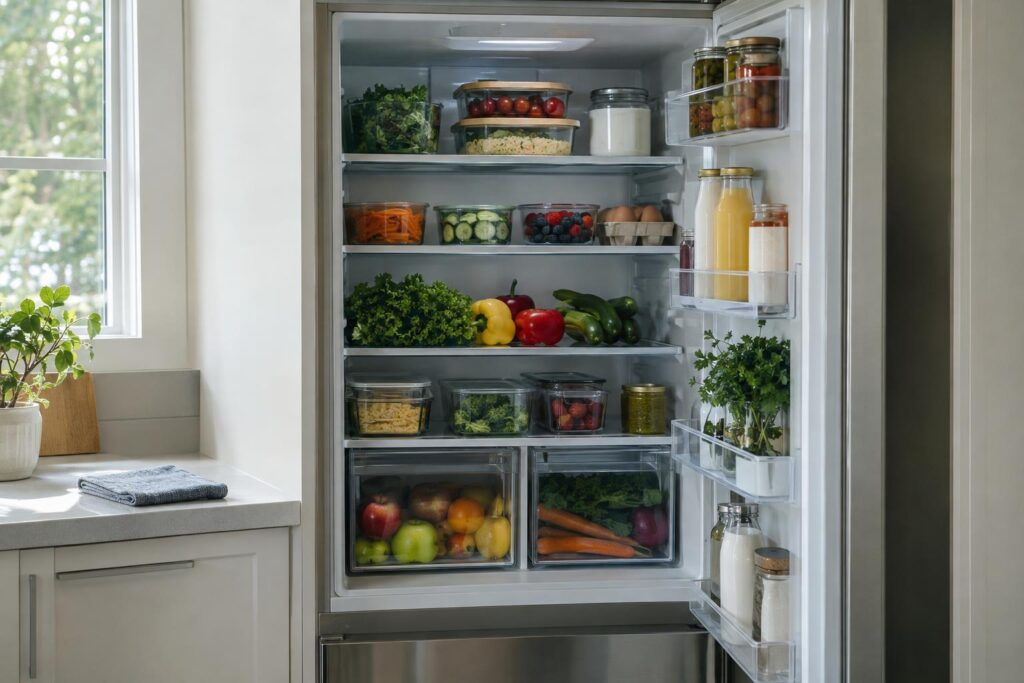
Cleaning a shared kitchen does not require handling another person’s food or deciding whether it should be discarded. Set a clear storage and labeling policy that follows the workplace’s own rules, then ask employees to keep personal containers within their assigned area. The cleaning routine can focus on shared surfaces, emptying waste, and leaving the sink usable. If food is spilled, collect it using appropriate tools and clean the surface according to its material and product label. Keep food waste separate from cleaning cloths and equipment.
Refrigerators, microwaves, and coffee machines need their own manufacturer instructions. Unplugging equipment, removing parts, or cleaning internal areas may be restricted to trained maintenance staff. The daily plan should distinguish a simple exterior wipe from internal maintenance. If a refrigerator smells unusual, stops cooling, leaks, or has an electrical issue, report it through the workplace’s facilities process instead of trying to repair it. Cleaning products should remain in their labeled containers and stored away from food, dishes, and employee belongings.
Match Cleaning Products to the Surface
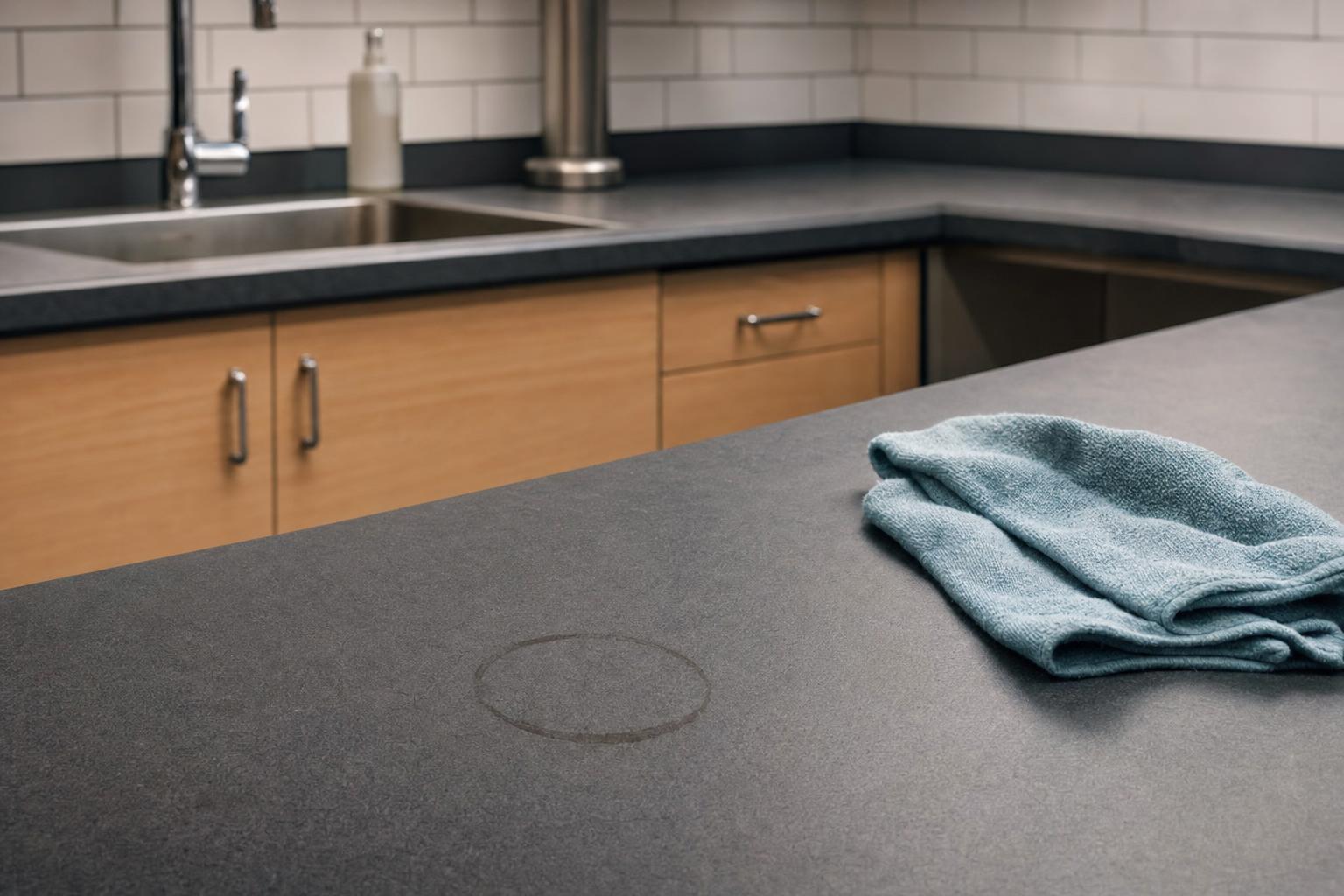
Before using a product, read its label for the surfaces it is intended to clean and any instructions about contact time, rinsing, ventilation, or protective equipment. A product that is suitable for a countertop may not be appropriate for a food-contact surface, appliance screen, or natural stone. Do not mix cleaners, transfer them into drink bottles, or leave them where someone may mistake them for a beverage. If the workplace has an approved product list, follow that list rather than bringing in a household chemical that has not been reviewed.
Use separate cloths for different areas, such as the table and the floor, and launder reusable cloths on a schedule that fits the workplace. Keep a visible way to identify which cloth is for which task; a color system can help only if everyone understands it and the cloths are actually stored separately. When a cloth becomes visibly soiled, change it instead of moving the soil to the next counter. EPA’s Safer Choice program explains its criteria for products, while a specific product label remains the instruction for use.
Set a Realistic Weekly Rhythm
Many workplaces benefit from a brief daily reset plus a scheduled review of less frequent tasks. The daily list might cover counters, dishes left in the sink, visible crumbs, and bins. A weekly review could check the refrigerator’s shared surfaces, cabinet fronts, table legs, and floor edges. The exact interval should reflect the number of employees, the kitchen’s use, and the company’s current cleaning arrangement. Avoid stating that one schedule fits every office; a quiet office and a busy shared workplace will not create the same amount of soil.
Make responsibilities specific. Employees can be asked to clear personal dishes and report spills, while a designated staff member or service handles the agreed cleaning scope. If the room is not being maintained between visits, revisit the division instead of adding an ever-longer checklist. A simple sign can remind users to wipe their own spills and remove perishable items according to workplace policy. It should not imply that an individual employee is responsible for every cleaning task or for maintaining equipment outside their role.

Review the Scope When the Space Changes
An office kitchen can change when the team grows, a new appliance arrives, or the room begins serving a different purpose. Update the task list when a counter is replaced, a coffee machine is added, or the trash setup changes. Remove tasks that no longer apply and clarify any new responsibilities. This keeps the routine accurate and avoids placing products or tools on a surface where they may be unsuitable.
When asking a commercial cleaning provider for a quote, describe the room, the surfaces, and the tasks you expect. Ask what the proposed scope includes and how the provider handles access, supplies, and reporting a maintenance problem. Those are practical questions; the answer should be based on the written service agreement, not an assumption that every office package includes the same kitchen work. 3D Cleaning provides commercial cleaning for businesses in its service area. Use the estimate form to discuss the location and requested scope.
Frequently Asked Questions About Shared Office Kitchen Cleaning
Who should clean the office kitchen?
Workplaces should set clear responsibilities. Employees can manage personal dishes and report spills, while agreed shared cleaning tasks can be assigned to staff or included in a contracted service scope.
How often should an office kitchenette be cleaned?
The schedule depends on its use and the workplace’s arrangement. A short daily reset and a separate recurring cleaning plan can be considered, then adjusted if the room’s use changes.
Can one product be used on every kitchen surface?
No. Check product labels, appliance instructions, and surface care requirements. Keep products in their labeled containers and never mix cleaners.
Should an office cleaner handle food left in the refrigerator?
The workplace should provide a clear food-storage policy. A cleaning scope should not rely on a cleaner guessing which personal food to discard.
To discuss a shared office kitchen as part of a broader commercial cleaning scope, contact 3D Cleaning using its estimate form. The company serves businesses in Cape Coral and Fort Myers, with supporting coverage in Punta Gorda; review the service-area information before requesting an estimate. Include the kitchenette’s approximate size, the surfaces present, how often staff use it, and any workplace access or product requirements that should be discussed. If the office has special food-handling or facility rules, share those with the person coordinating service so expectations are clear before work begins. A provider can then explain what its proposed scope includes and identify any task that belongs to facilities maintenance rather than ordinary cleaning. Keep the written scope with the office’s routine so the daily employee reset and the scheduled professional cleaning complement one another without duplicating responsibilities.