

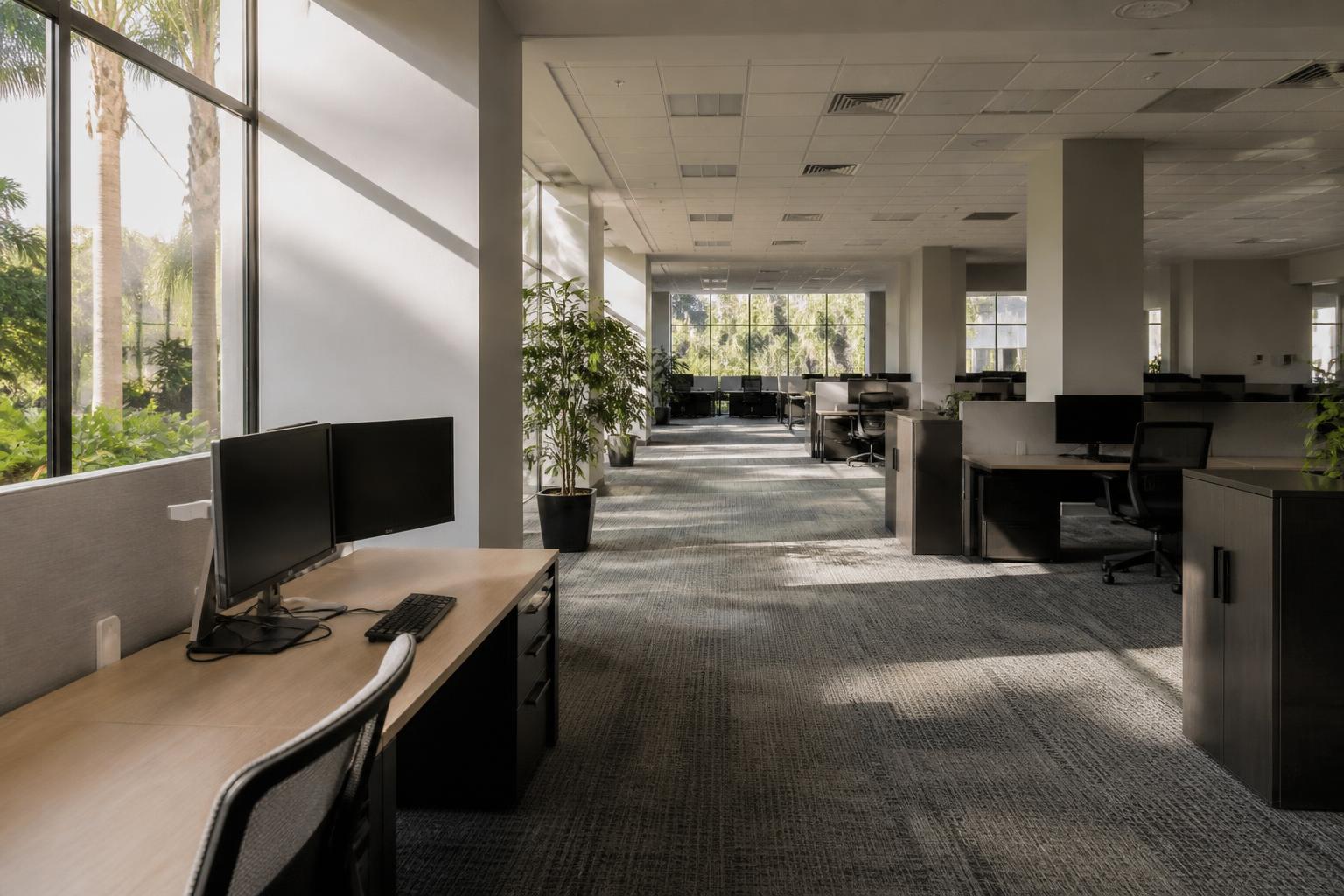
There’s no single right answer to how often an office needs cleaning. The correct office cleaning frequency depends on how many people use the space, what kind of work happens there, and how the office is laid out. Here’s how Fort Myers businesses can work out a schedule that actually fits.
Start With Foot Traffic
The number of people moving through an office daily is the biggest factor in how fast it gets dirty. A small office with a handful of employees can often get by with cleaning two or three times a week. A busier office with a steady stream of employees, clients, or deliveries usually needs daily attention to keep restrooms, entryways, and common areas from falling behind between visits.
Industry Changes the Calculation
Some industries need more frequent cleaning regardless of headcount. Medical and dental offices generally require daily disinfecting of high-touch surfaces and waiting areas due to the volume of visitors and health considerations. Professional offices with mostly desk work and few visitors can often stretch cleaning further apart, since the main need is routine dusting, trash removal, and restroom service rather than constant disinfecting.

Layout and Shared Spaces Matter
Offices with shared kitchens, break rooms, or multiple restrooms need more frequent attention in those specific areas even if the rest of the office could go longer between cleanings. It’s common for a business to split its schedule: daily service for restrooms and kitchen areas, with dusting, floor care, and general tidying on a lighter two or three times a week rotation for the rest of the space. This kind of split schedule often ends up more cost-effective than a single frequency applied evenly across a whole office.
Signs Your Current Frequency Isn’t Enough
A few signals point to a schedule that needs to increase: trash cans regularly full before the next visit, restroom supplies running out between cleanings, visible dust building up on desks and shared surfaces, or employees mentioning the office feels dirty toward the end of the week. Any of these are a sign the current frequency was set for a smaller or slower office than the one you actually have now.
How to Trial a New Frequency
If it’s unclear whether an office needs more or less frequent cleaning, the most practical approach is a short trial rather than committing to a permanent schedule change right away. Try the new frequency for four to six weeks and track a few concrete signals: whether trash cans and restroom supplies are consistently holding up between visits, whether employees mention the office feeling clean or not, and whether common areas look presentable by the end of the week rather than by the end of the day after cleaning. A trial period also makes it easier to have a specific conversation with your cleaning provider about adjusting the schedule, since you’re working from real observations rather than a general sense that something isn’t quite right. Most commercial cleaning providers are willing to adjust frequency after a trial period once both sides can see how the office actually holds up.
Balancing Cost Against Cleanliness
More frequent cleaning isn’t automatically the right answer for every office, since cost scales with visits. The more useful question isn’t “how often is the most thorough,” but “how often keeps the office consistently at the standard employees and visitors expect, without paying for visits that don’t move the needle.” An office that jumps from three visits a week to daily service will notice a difference in restrooms and kitchen areas fastest, since those are the spaces that show wear the quickest. General desk areas and common spaces often don’t need that same jump, which is exactly why a split schedule, heavier attention on high-use areas and lighter coverage elsewhere, tends to deliver a cleaner-feeling office without paying for daily service across the entire footprint.

The CDC’s guidance on cleaning facilities recommends cleaning high-touch surfaces regularly and considering more frequent cleaning in high-traffic spaces. These recommendations cover community settings such as offices; healthcare and other regulated facilities have separate requirements.
Assign Responsibility Between Scheduled Visits
A cleaning frequency does not say who handles a problem that appears between visits. Write down a simple division of responsibility for the office: which tasks belong to the cleaning agreement, which supplies building management provides, and who receives staff reports. This is especially useful when a tenant, landlord and cleaning provider all look after different parts of the same property.
Keep the task and the timing together. For instance, an office manager can ask whether restroom supplies are checked during each contracted visit and decide who monitors them on other days. Do not assume that a regular cleaning appointment includes purchasing supplies, responding to spills or handling every maintenance issue. Confirm those arrangements separately.
Use a brief log when the same problem recurs. Record the location, date and whether it appeared before or after the scheduled visit. That information helps separate a frequency issue from an unclear assignment or a task that needs discussion. Review the pattern with the provider before adding more visits; a clearer responsibility may solve the gap without changing the entire office schedule.
Frequently Asked Questions
Q: Can office cleaning frequency change seasonally?
A: Yes, many offices increase frequency during flu season or other high-traffic periods and scale back during slower stretches, such as extended remote-work weeks.
Q: Is daily cleaning necessary for a small office?
A: Not always. A small office with light foot traffic can often maintain a clean standard on a lighter three-times-a-week schedule, with daily attention reserved specifically for restrooms.
Q: Who decides the cleaning schedule, us or the cleaning company?
A: It should be a joint decision. A good commercial cleaning provider will recommend a frequency based on your traffic and layout, but the final schedule should fit how your office actually operates day to day.
Multi-Tenant Buildings Add Another Variable
Offices inside a larger multi-tenant building sometimes have cleaning frequency partly determined by building management rather than the individual tenant, particularly for common areas like lobbies, shared restrooms, and hallways. If your suite is one of several in a shared building, it’s worth clarifying what’s covered by the building’s own janitorial contract versus what falls under your own office cleaning arrangement, since overlap or gaps between the two are a common source of confusion. A tenant that assumes the building handles interior office cleaning, when it only covers common areas, can end up with a suite that looks noticeably less maintained than the shared spaces around it.
Getting Input From the People Who Use the Space
Whoever manages the cleaning contract isn’t always the person who notices when the office is falling behind. Front-desk staff, office managers, and anyone who spends time in shared spaces like the kitchen or restrooms tend to notice cleanliness issues well before they show up as a formal complaint. Building a quick, informal way for staff to flag when something’s been missed, even just a shared note or a quick message to whoever manages the account, gives a much faster signal than waiting for a scheduled review to catch a pattern. Offices that build in this kind of feedback loop tend to land on the right frequency faster than those relying solely on periodic manager check-ins, simply because the people closest to the space are the ones who notice first.
Set the Right Office Cleaning Schedule
3D Cleaning provides janitorial services for offices across Fort Myers and the surrounding area, with schedules built around your office’s actual traffic and layout. Contact 3D Cleaning to set up a cleaning frequency that matches your space.